
Anatomy 101
In recognition of Eve Baker
These anatomy diagrams can be magnified. Pinch with two fingers, or double-tap, to zoom in.
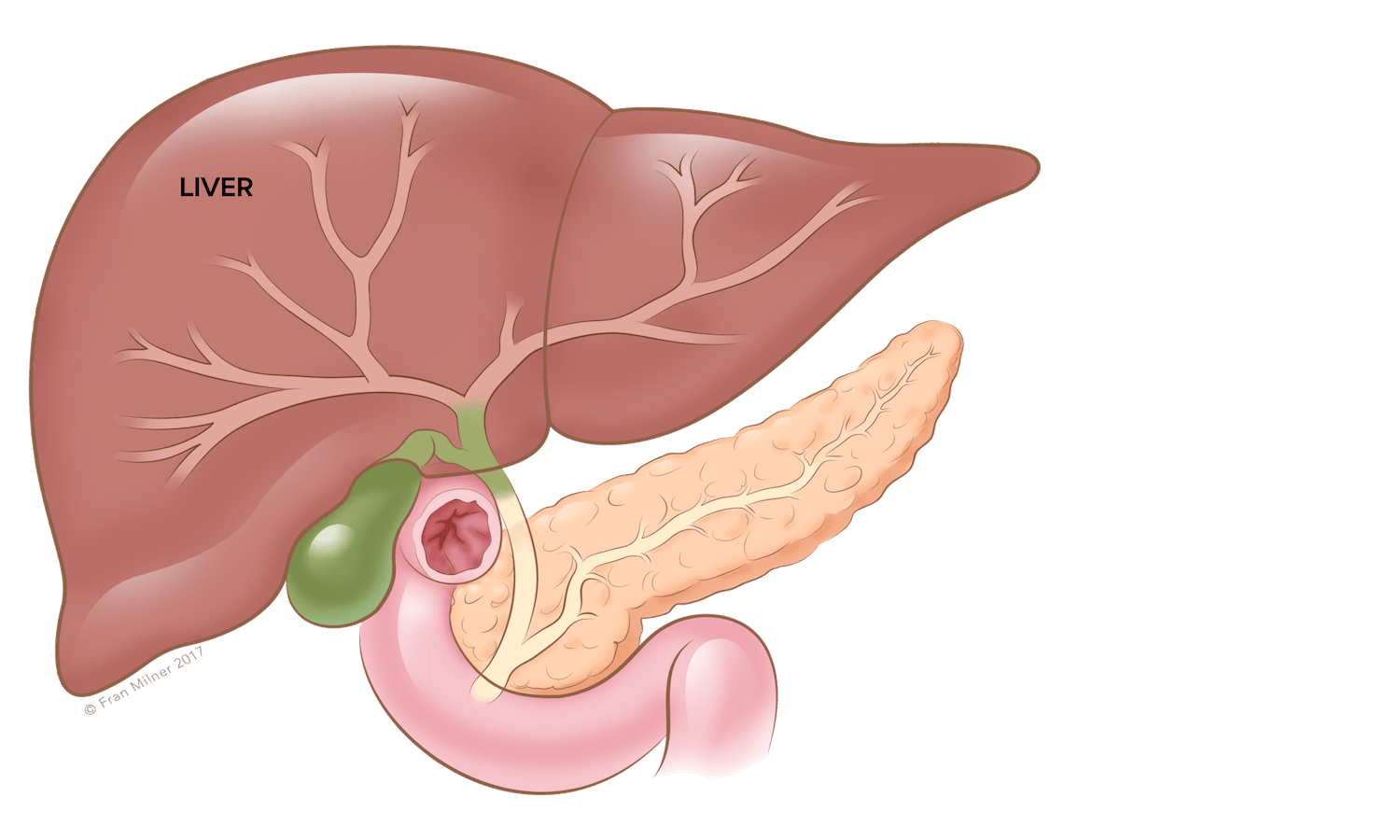
Liver
The liver is in the upper abdomen near the stomach, intestines, gallbladder, and pancreas. The liver cleanses the blood and aids in digestion by secreting bile. The liver has a right lobe and a left lobe. Each lobe is divided into additional segments.
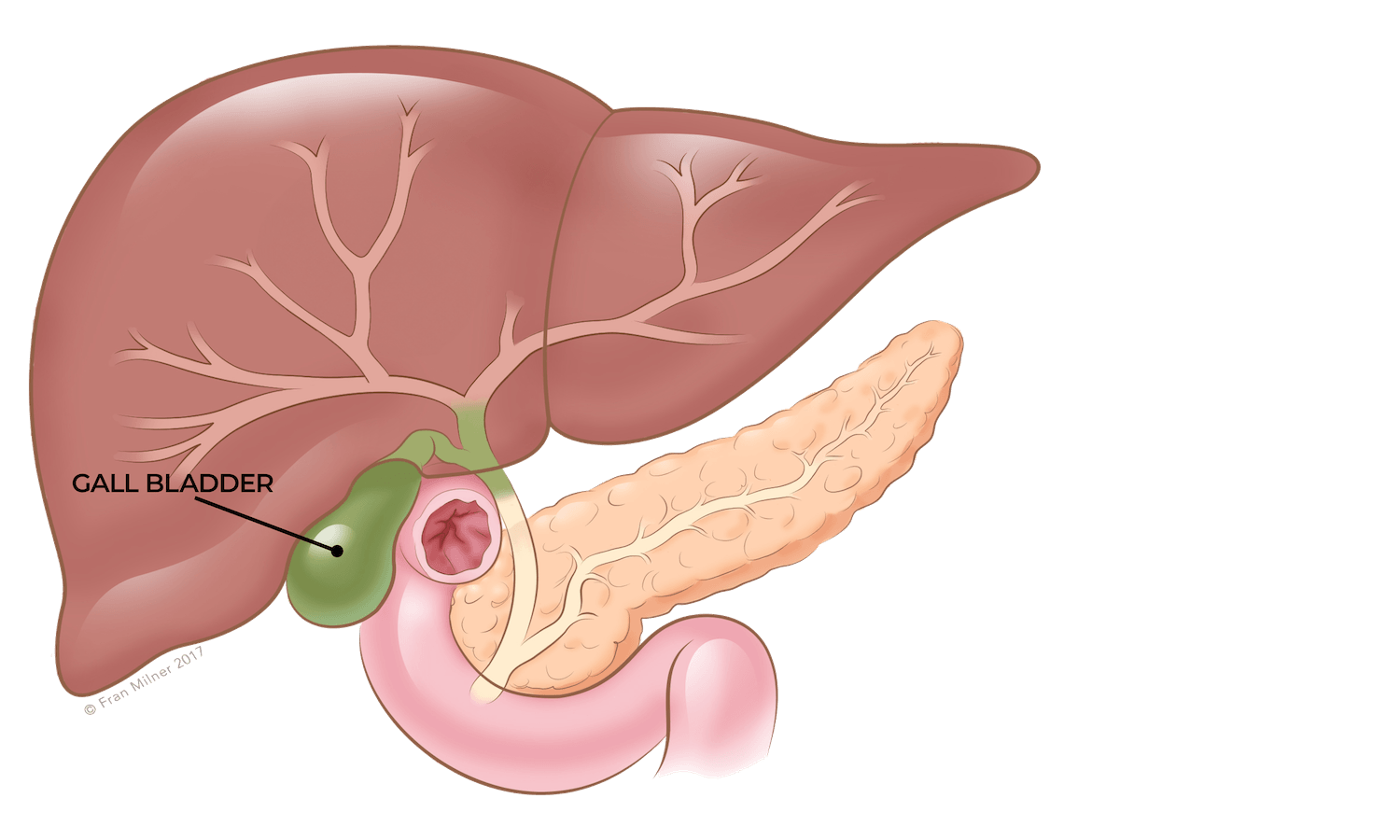
Gallbladder
The pear-shaped organ found just below the liver. Bile is concentrated and stored in the gallbladder. Bile flows through the cystic duct and the common bile duct into the small intestine when food is being digested.
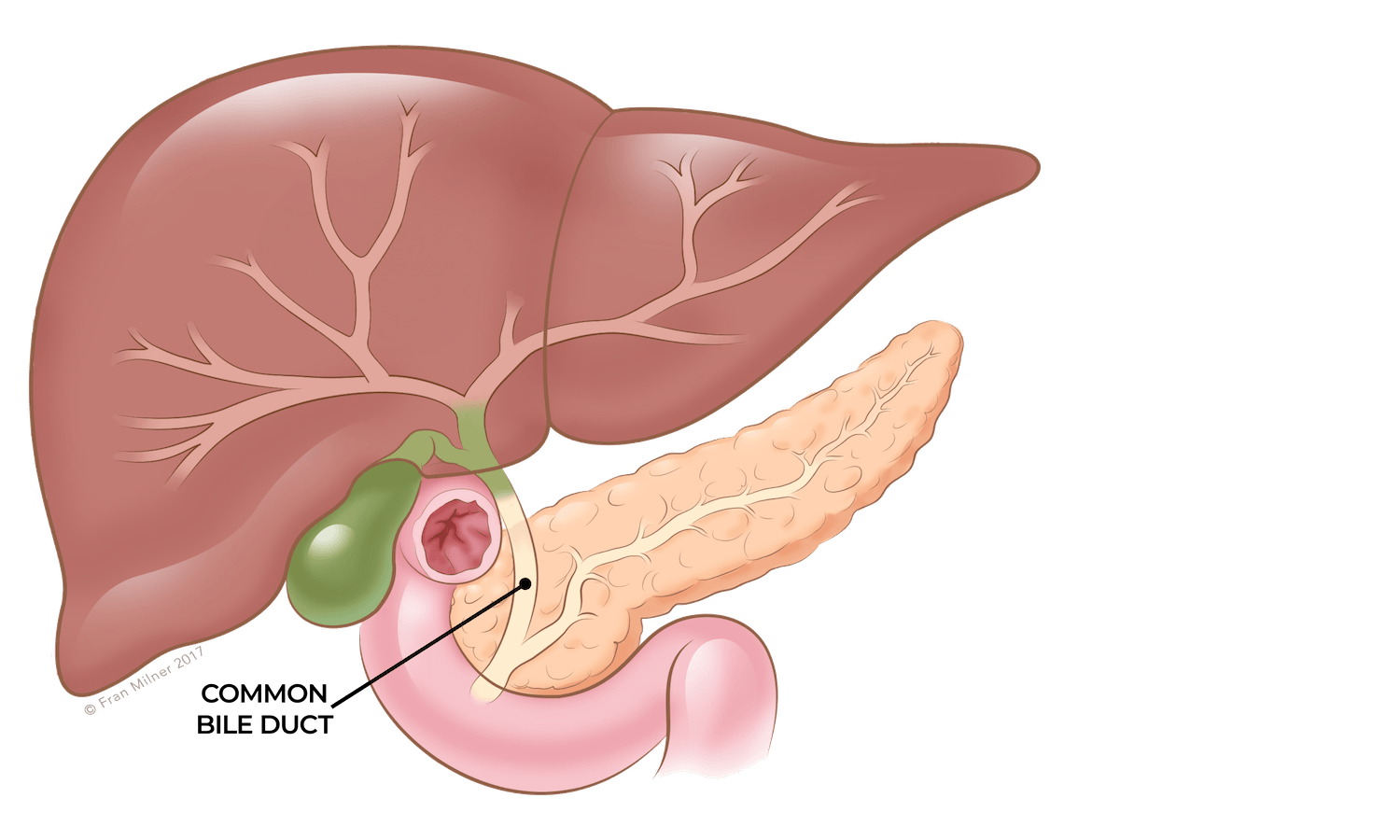
Common bile duct
A tube that carries bile from the liver and gallbladder, through the pancreas, and into the small intestine. The common bile duct starts where the ducts from the liver and gallbladder join and ends at the small intestine. It is part of the biliary system.
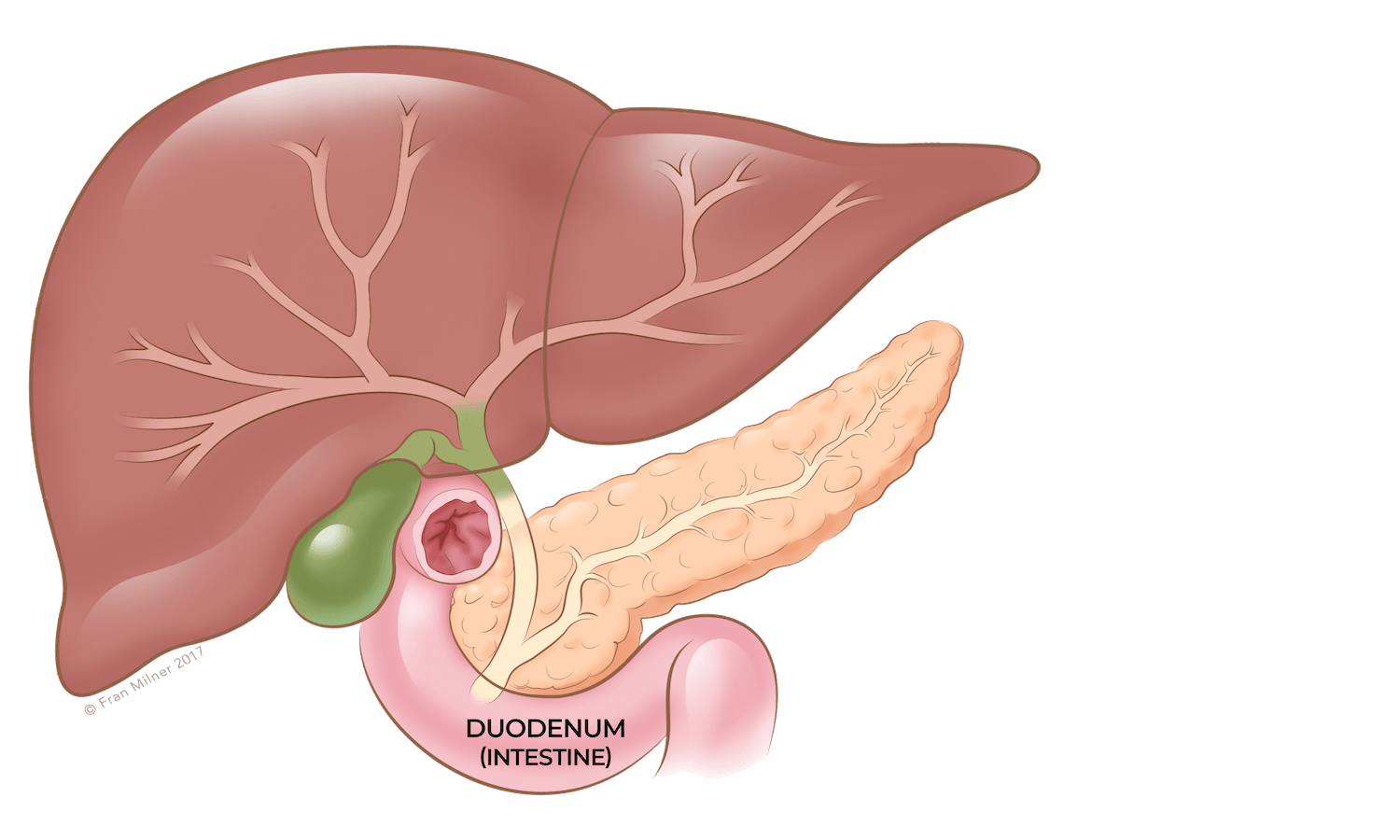
Duodenum (intestine)
The first part of the small intestine. It connects to the stomach. The duodenum helps to further digest food coming from the stomach. It absorbs nutrients (vitamins, minerals, carbohydrates, fats, proteins) and water from food so they can be used by the body.
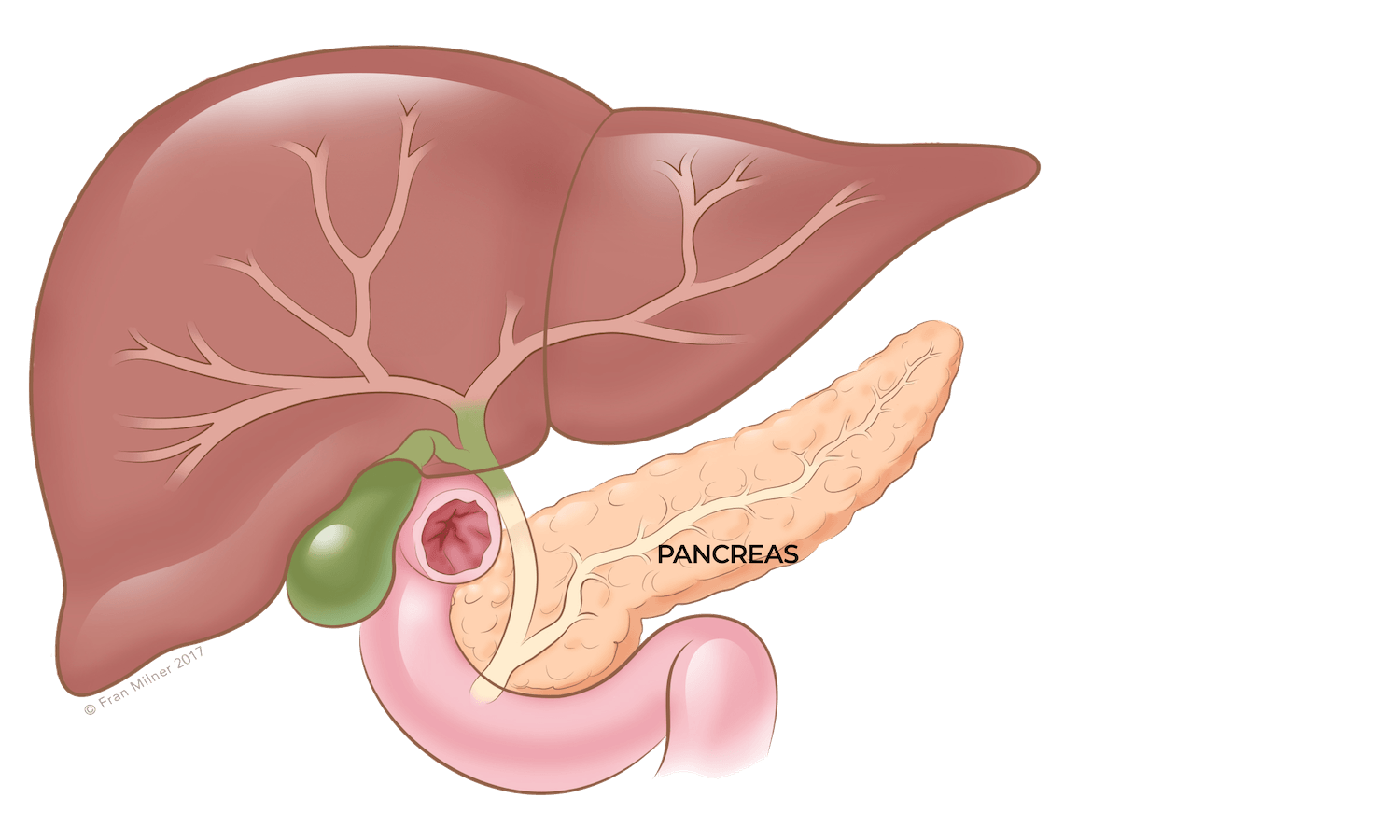
Pancreas
A glandular organ located in the abdomen. It makes pancreatic juices, which contain enzymes that aid in digestion, and it produces several hormones, including insulin. The pancreas is surrounded by the stomach, intestines, and other organs.
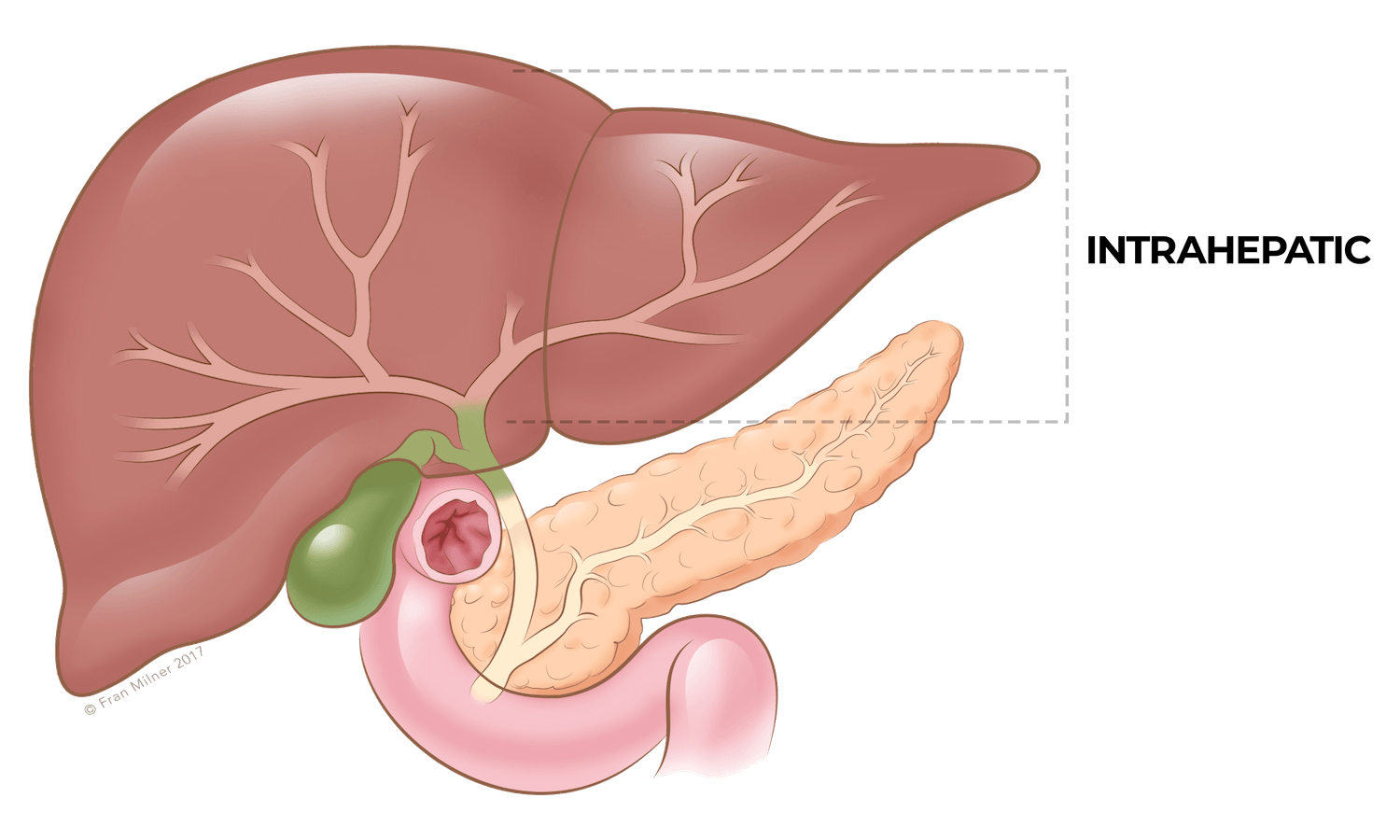
Intrahepatic
Intrahepatic CCA occurs inside the liver where cancer develops in the smaller bile ducts.
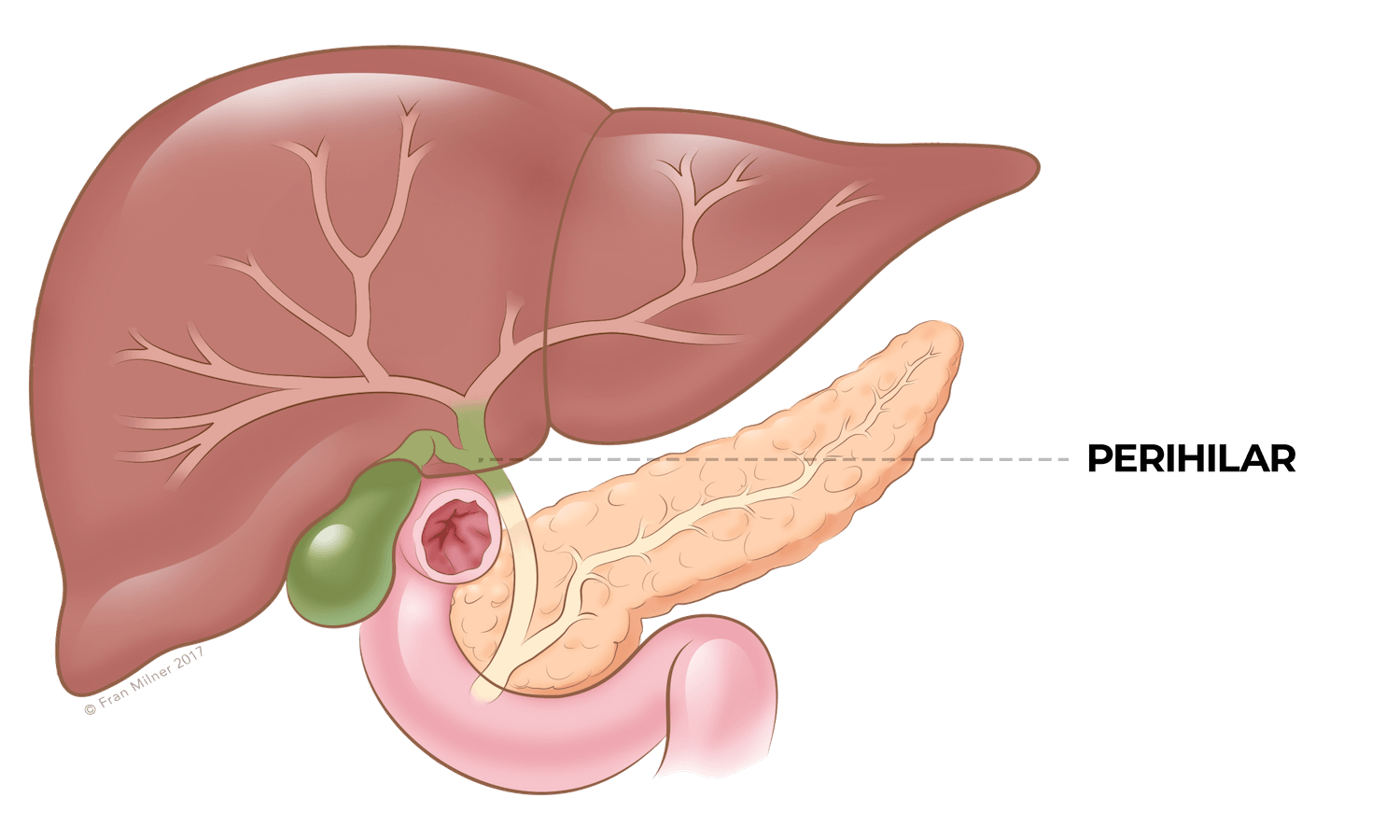
Perihilar (Hilar or Klatskin Tumor)
These cancers develop where the right and left hepatic ducts have joined and are leaving the liver.
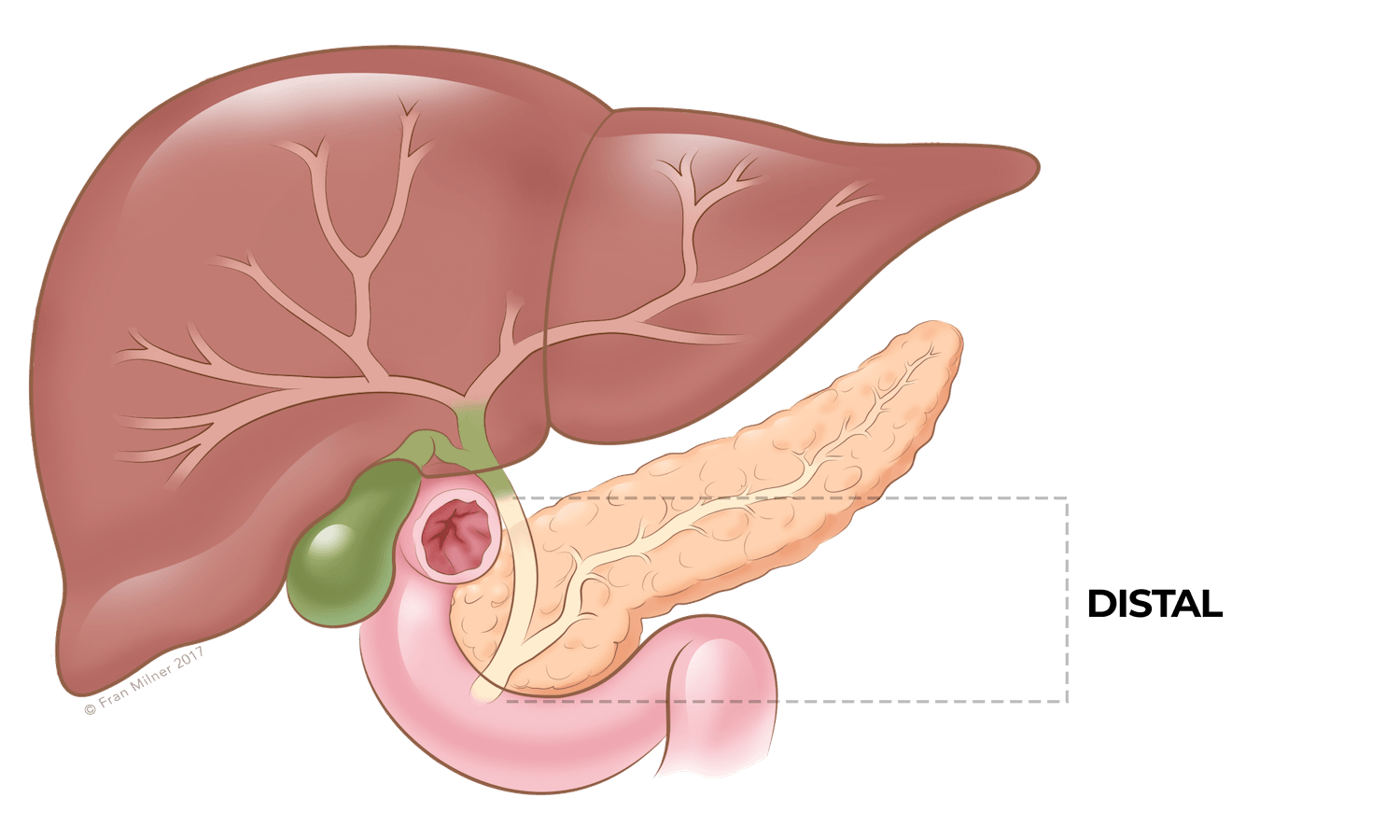
Distal
Distal CCA occurs outside the liver after the right and left hepatic bile ducts have joined to form the common bile duct. This type of cancer is found where the common bile duct passes through the pancreas into the small intestine.
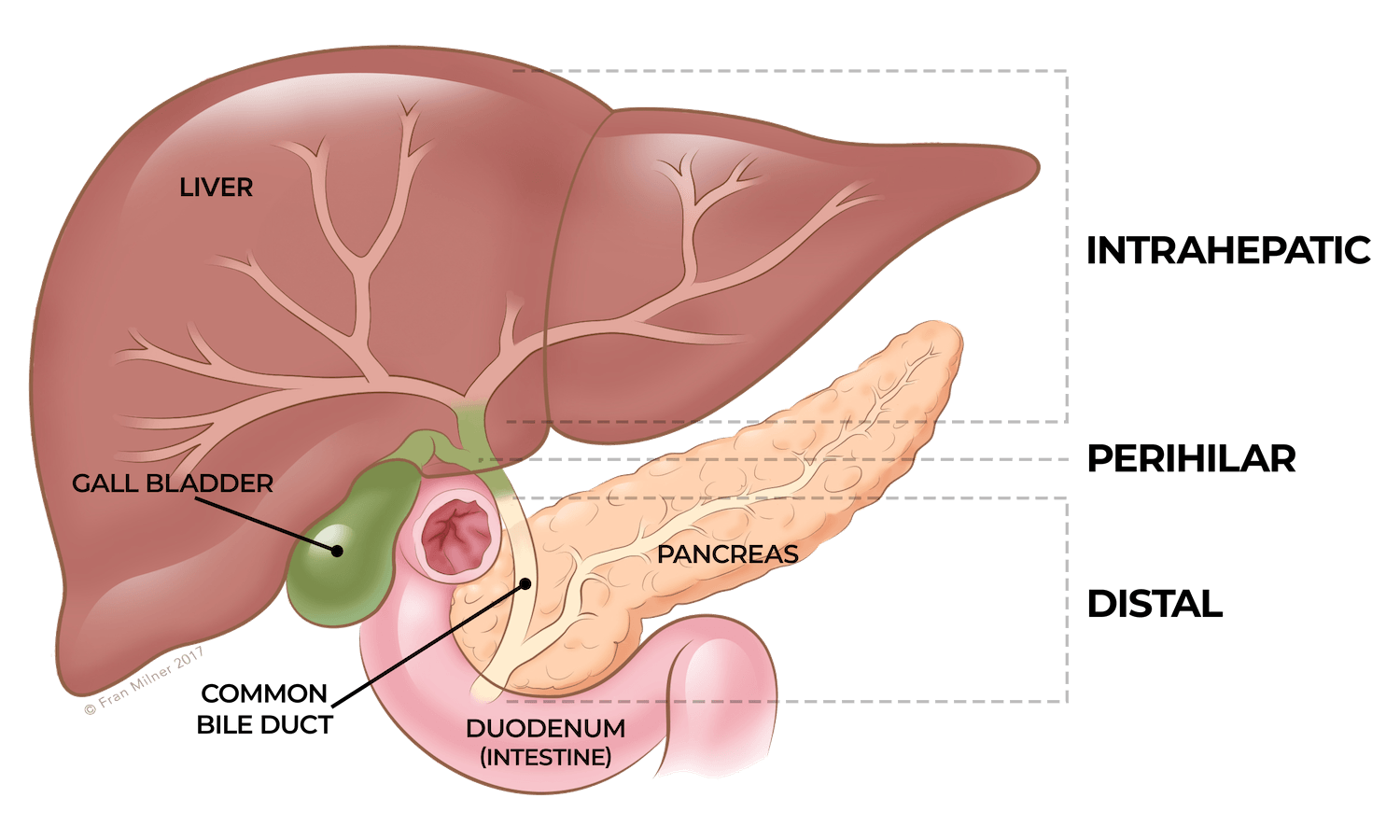
Image Credit: © Fran Milner 2017
Eve Judith Baker (1962-2026) was a beloved, brilliant and courageous person who believed that movement is medicine. As a long-distance hiker and master massage therapist, Eve had a deep understanding of the physical body, and she was passionate about empowering others with her knowledge. Eve generously supported CCF’s patient app because of her strong belief that every patient deserves the resources to make informed decisions about their care. Through her generosity, her legacy continues to uplift patients and families with knowledge, guidance, and hope.